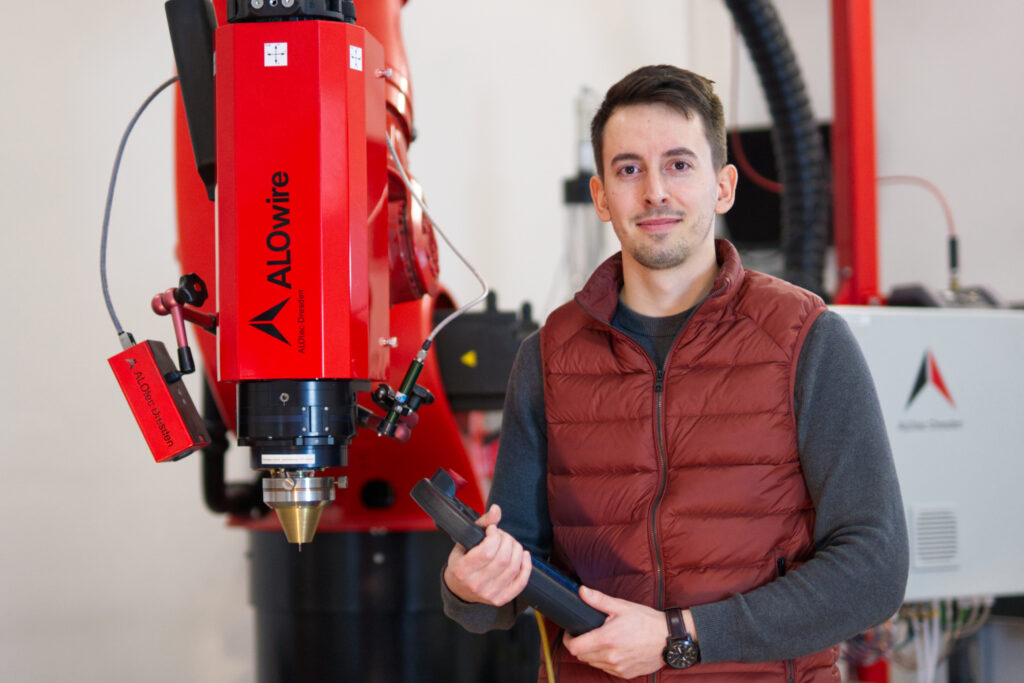
Research project: Isegrim
Research project on repairing erosion damage in fusion reactors using wire-based laser cladding.
ALOtec Dresden is working on a joint development project to reliably detect damage to reactor wall components and regenerate the material within a small process window and with very low contamination of the environment. The background to this is a key issue for future fusion energy: the inner walls of a reactor are subject to extreme stress. They erode—and replacing these components is expensive, technically complex, and causes long downtimes.

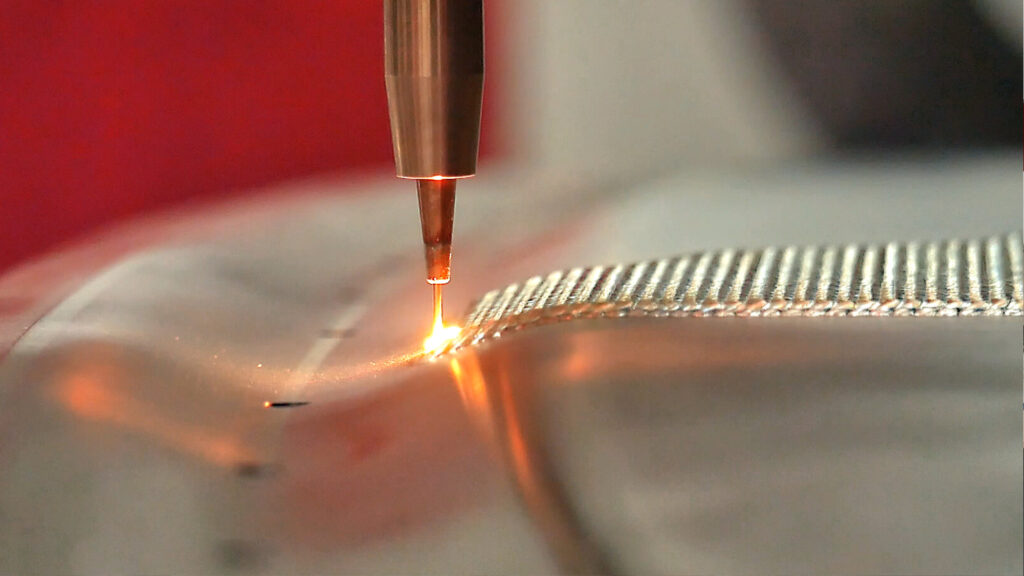
Our task in the project: to develop a cost-effective repair concept using a mobile robot system and wire-based laser cladding that regenerates erosion damage directly on site instead of replacing entire components.
Why laser cladding?
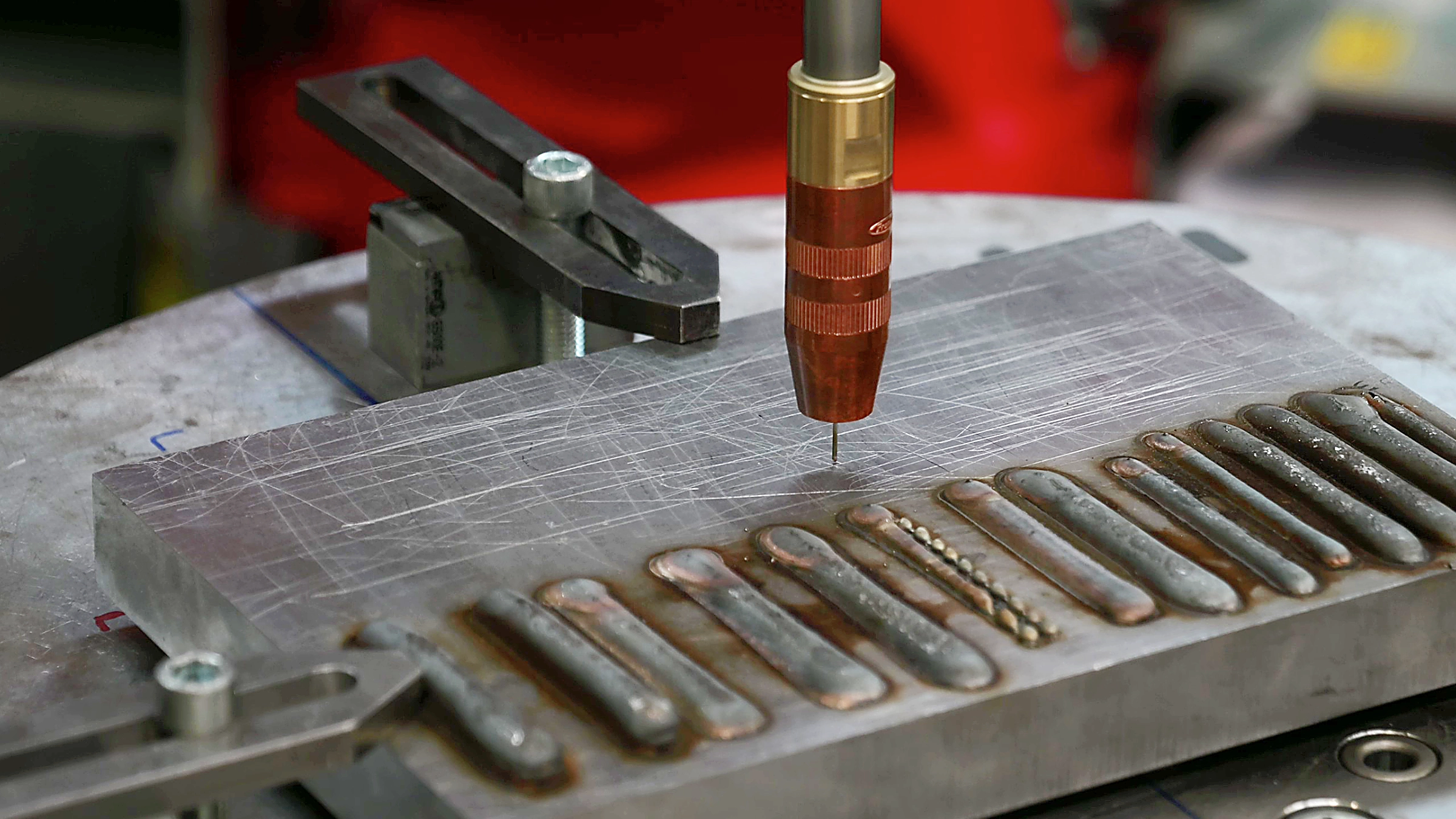
Wire-based laser cladding (LMD-w) is suitable for use in reactors. This additive process applies new material precisely and cleanly—without contaminating the surrounding area. This creates a robust tool for regenerating heavily stressed wall areas, especially in demanding materials such as tungsten.
What we are working on:
We develop and test mobile robotic systems that will be able to perform repairs directly in the reactor room using wire-based laser cladding – remotely controlled, safe, and highly precise. This includes:
- the testing of further mobile system concepts
- the expansion of our expertise in wire-based laser cladding
- the integration of all necessary systems into a comprehensive system concept
The goal is to develop a solution that enables damaged PFCs (plasma facing components) to be regenerated automatically and economically—under the real-world conditions of a fusion power plant.
 Progress update: sensor system, control and path planning work together
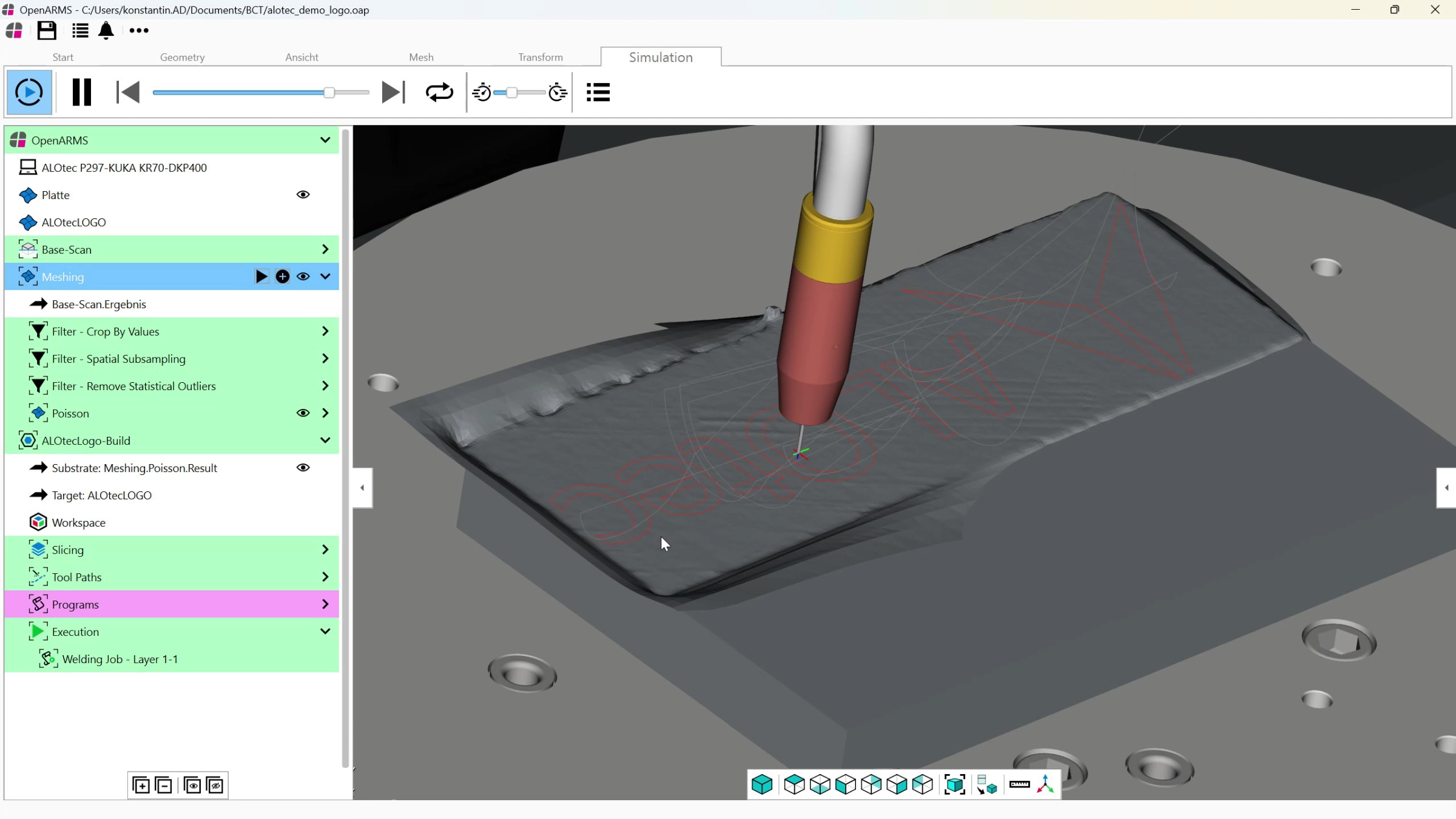
At the halfway point of the project, we have reached an important step together with BCT. A scanner captures the part, the BCT software uses the scan to plan the weld path, and the robot carries it out, from 3D scanning to quality inspection, all with the same data.
- The sensor system and the first software version are implemented and tested
- Scan data can be transferred to different projects, and the data stays consistent
- The interaction between sensor system, control and path planning is functional
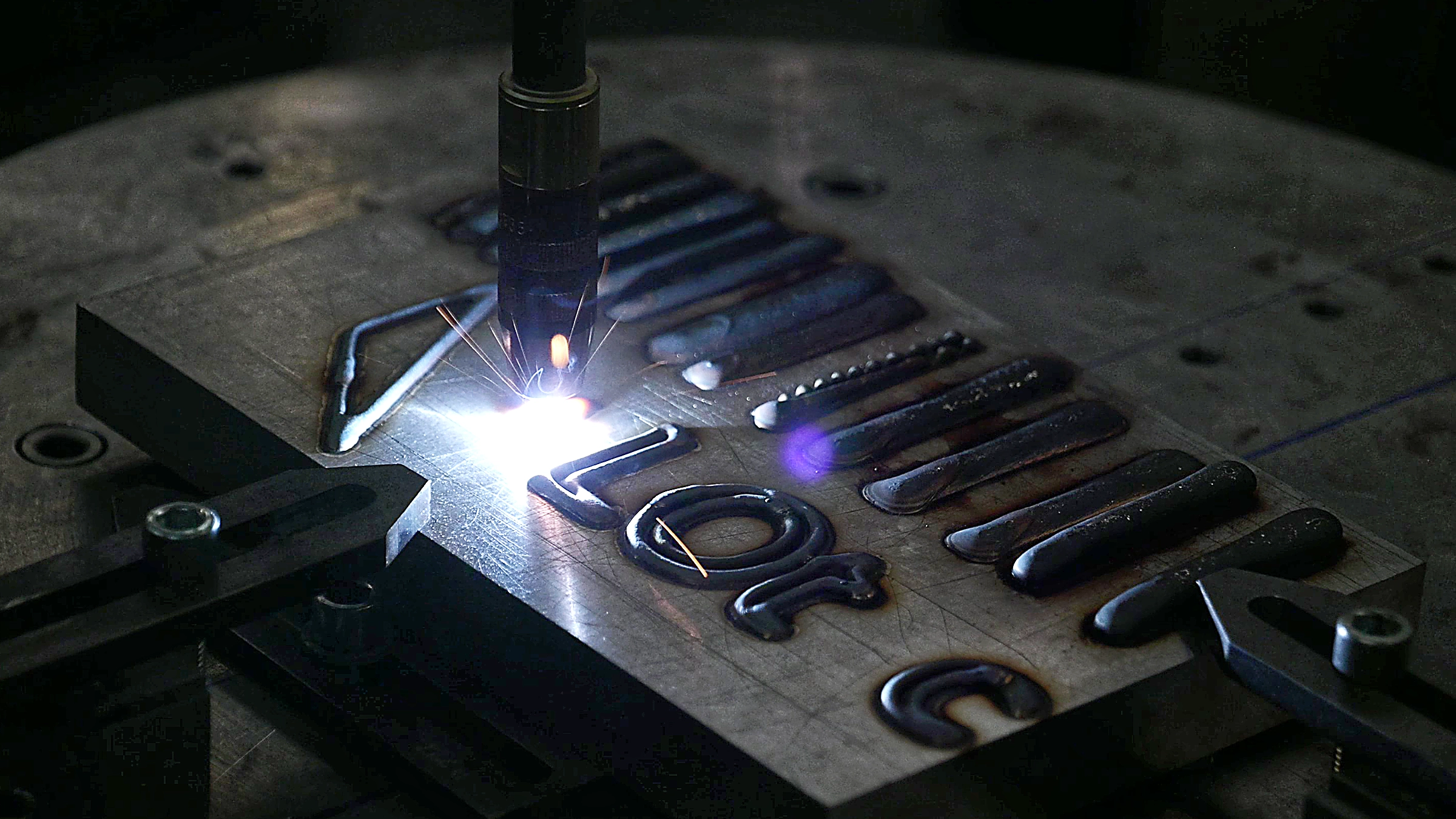
Watch on YouTube
Project partners
ALOtec Dresden GmbH
Development of a plant concept for the regeneration of erosion damage in a fusion power plant

Verein Deutscher Ingenieure
Project management

Fraunhofer-Institut für Produktionstechnologie
Manufacturing research on tungsten cladding

Precitec GmbH & Co. KG
Development of a system technology consisting of a machining head and sensor technology for controlled repair

BCT Steuerungs- und DV-Systeme GmbH
Sensor-based process control and digital process integration

LaVa-X GmbH
Development and testing of a mobile vacuum system for repair welding using LMD-w

Forschungszentrum Jülich GmbH
Development of the tungsten-based LMD-w process and validation through high heat flux experiments
Funding for the project
The project “Identification of damage caused by erosion in the generator and regeneration of the material using LMD-w (Isegrim)” is funded by the Federal Ministry of Research, Technology and Space.
Funding code: 13F1006B

Want to find out more about our research?
Let’s talk.
Whether you have questions about our research and development projects or simply want to share your experiences – we look forward to hearing from you.