
ISEGRIM: Scan, plan, weld with consistent data
In the ISEGRIM research project, we have reached an important milestone together with BCT Steuerungs- und DV-Systeme GmbH: sensor system, control and path planning now work together, from 3D scanning to quality inspection, all with the same data.
Before a robot can repair a component, it needs to know it in detail. A scanner captures the part, the BCT software uses the scan to plan the weld path, and the robot carries it out.
Watch on YouTube
 The process:
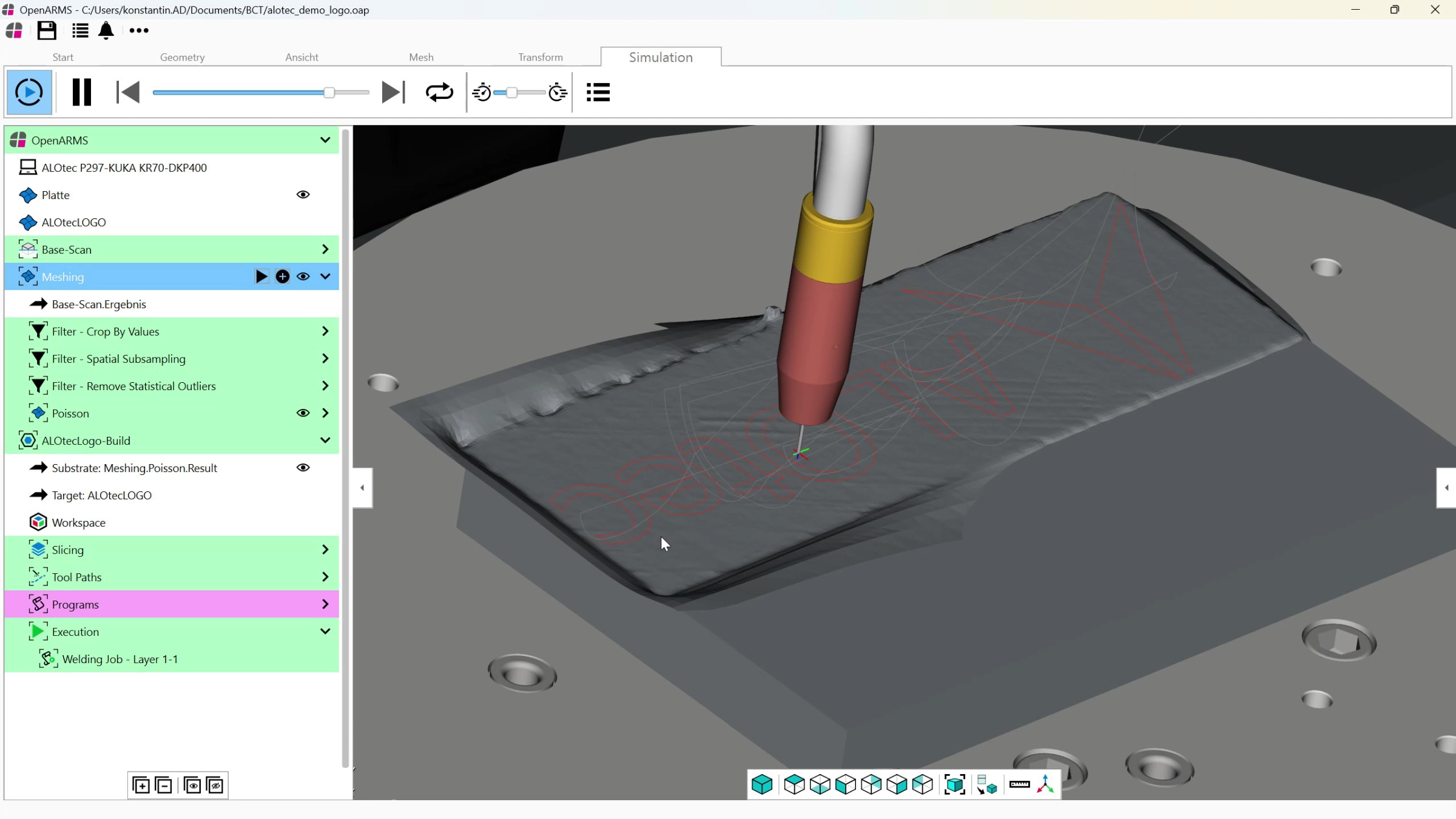
- Set up the scan: The BCT software defines how the part is captured.
- Scan the part: A KEYENCE 2D/3D laser profile scanner moves across the part.
- Digital model: The part and the robot are represented as a 3D model in the software.
- Select the area: The area to be processed is marked on the scan.
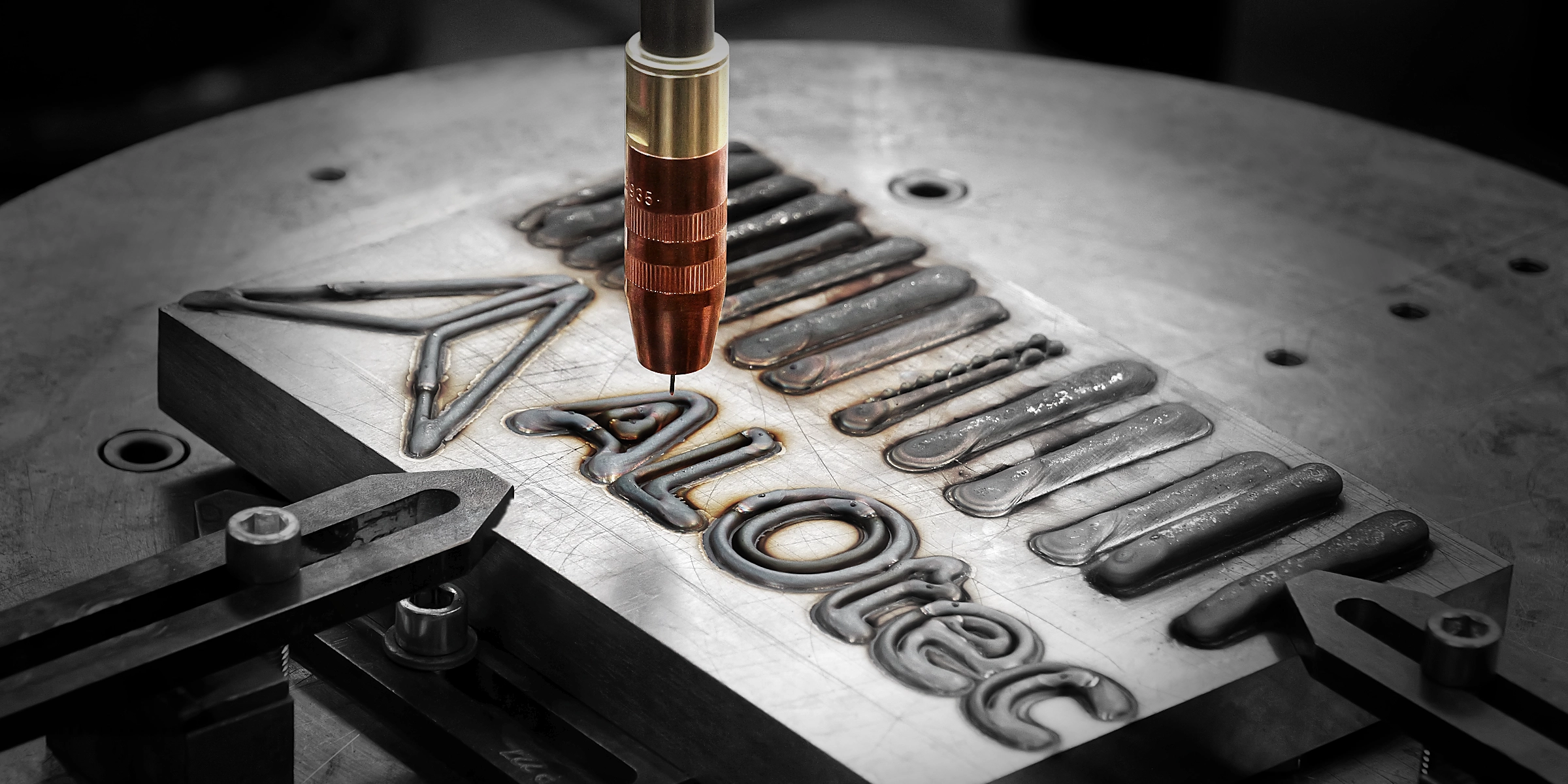
- Plan the path: A contour becomes the weld path, in this demo our logo.
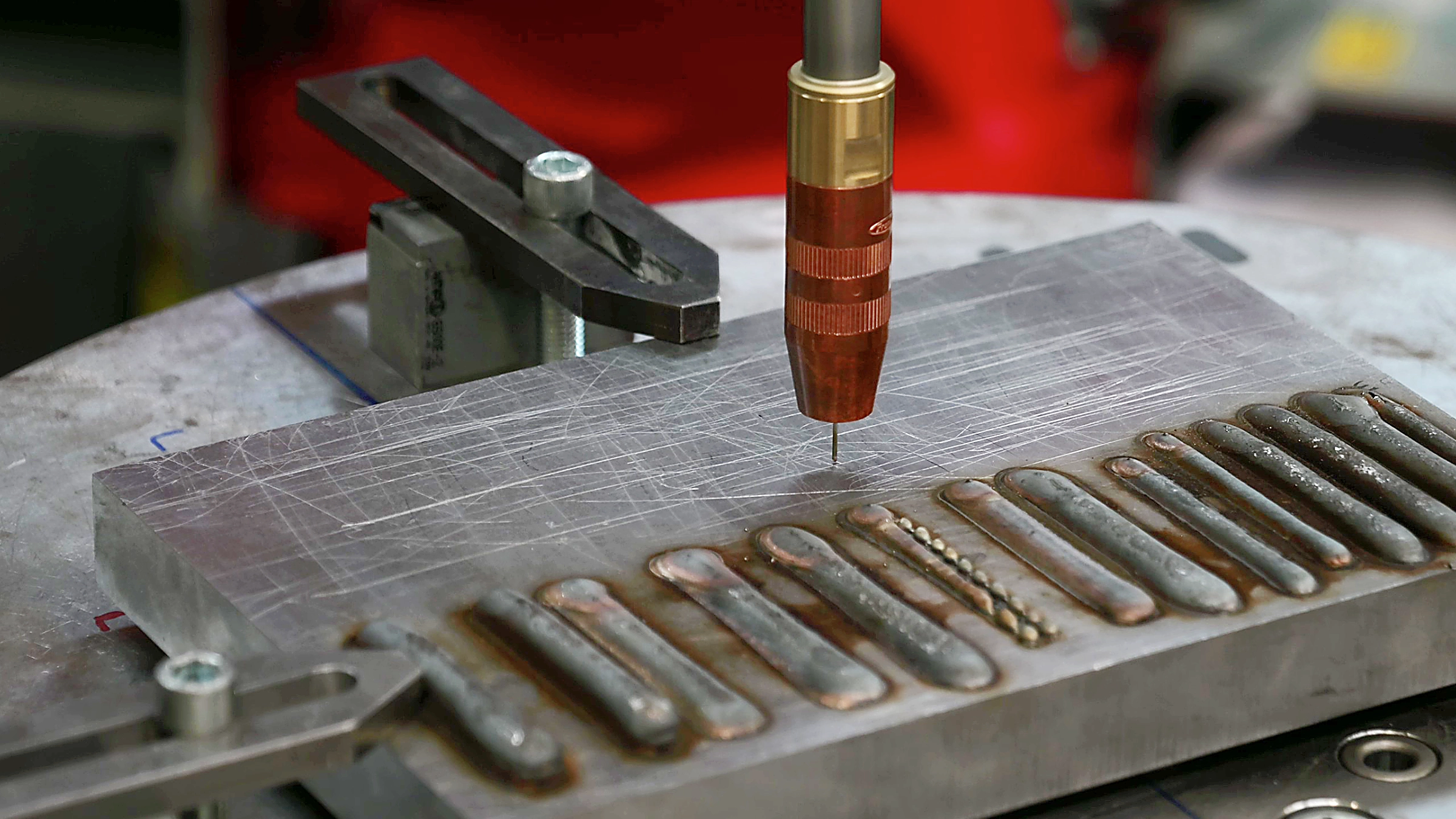
- Simulate: The robot first runs the path virtually, then for real just above the part.
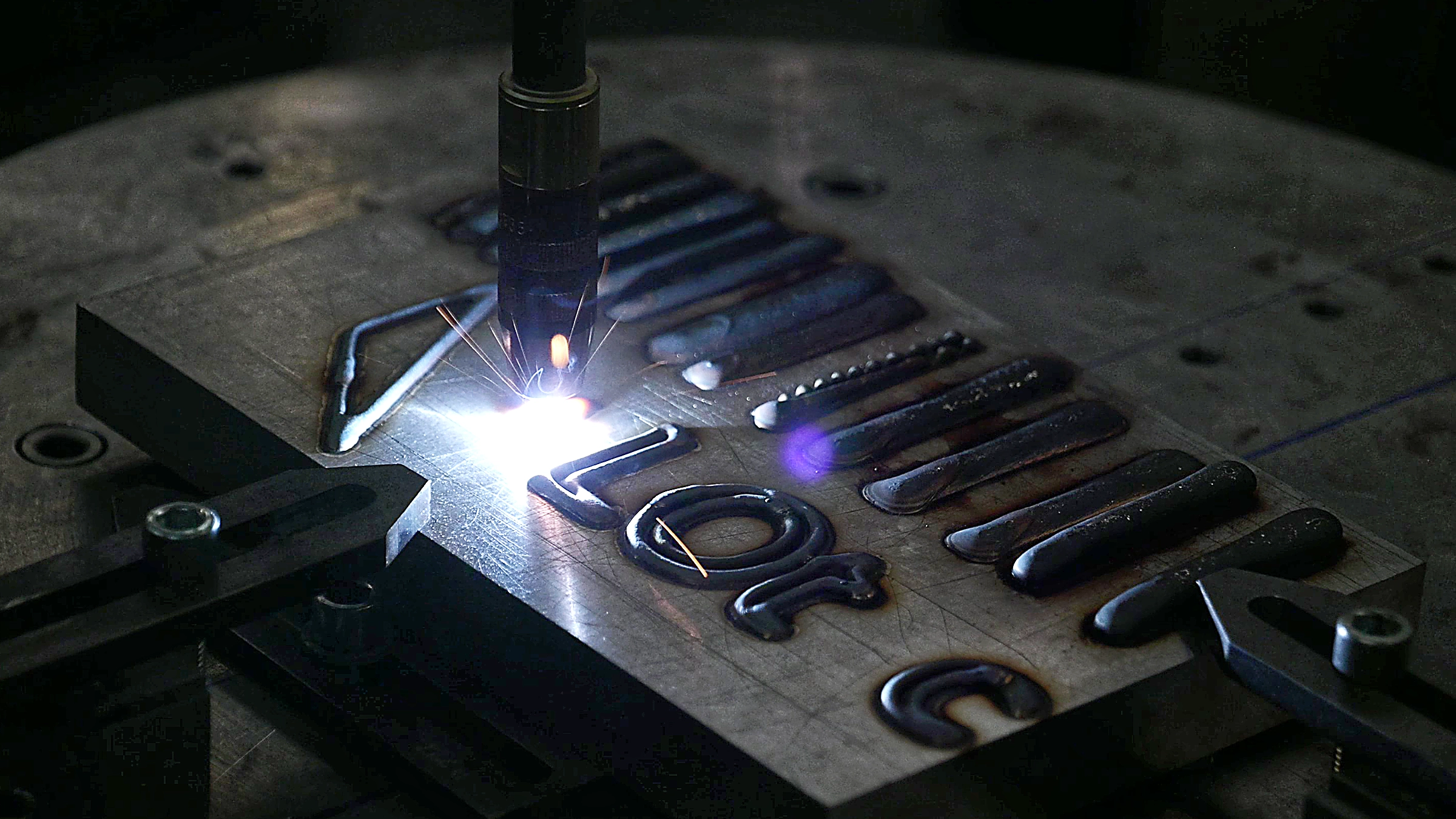
- Weld: The robot welds the planned path.
- Inspect: A second scan captures the finished weld for quality assurance.
What the milestone shows
The sensor system and the first version of the software developed by BCT are implemented and tested. The software records data, represents the robot and the part, and runs on different robot controllers, so it is not tied to one specific system.
The data stays consistent throughout the entire process chain. Scan data can be transferred to different projects.
And the interaction between sensor system, control and path planning works, as the scanning and welding tests have shown.
Why arc instead of laser?
For this test, we used arc welding (Fronius iWave). Laser welding always requires full laser safety measures, and this step was not about the welding process but about how the systems work together. In the project itself, repairs will later be carried out with wire-based laser cladding (LMD-w).
What ISEGRIM is about
The inner walls of fusion reactors are exposed to extreme stress and erode over time. Replacing these components is expensive and causes long downtimes. In ISEGRIM, we are working with five partners on the concept for a mobile robot system that detects erosion damage and repairs it on site, later remotely controlled and automated.
Project partners: Fraunhofer IPT, Precitec GmbH & Co. KG, BCT Steuerungs- und DV-Systeme GmbH, LaVa-X GmbH, Forschungszentrum Jülich GmbH
Funding for the project
The project “Identification of damage caused by erosion in the generator and regeneration of the material using LMD-w (Isegrim)” is funded by the Federal Ministry of Research, Technology and Space.
Funding code: 13F1006B
